
Hurray!!! Today was the day your smile journey with Aligners Globe has ended. Your teeth are straightened, smile is worth showing off and bite is in its exact place. You felt relieved and excited. In your head, it’s the smile you have always dreamt of during your orthodontic treatment. You were in your dentist’s office, almost ready to leave, your dentist reminded you of the last phase of your orthodontic treatment which you have totally forgotten - the retainers. Your Orthodontist prescribes you a retainer or a fixed retainer after Aligners or braces, what is it for?
You were given all the information about retainers by your dentist. Now that you are back home and preparing yourself for this next important step.
So here’s all the general information you need to know about the retainers.
As the name indicates, it “retains” the movement of teeth in new positions achieved by your braces or Aligners.
Wearing a dental retainer after any orthodontic treatment is an extremely important step, because it keeps teeth stable in their new positions. If you want your teeth to remain in their ideal new position, it is best to wear a dental retainer as instructed by your orthodontist -Aligners Globe Provider.
Retainers are used to maintain and avoid deviation of newly achieved teeth position after aligners treatment or braces are off, while Aligners are clear, invisible braces that bring malposition or spaced teeth to the ideal and desired teeth positions.
After your smile journey has been completed with Aligners or Braces off, the new bone formation has not been fully matured and is soft, so your teeth will move back to their previous original position if they are not retained in new positions with some retentive device. A risk of relapse exists. Relapse is the loss of teeth corrections achieved after orthodontic treatment. To avoid this relapse from occurring the patient has to wear a retentive device according to the orthodontist's advice and prescribed time until the bone is fully mature and hard.

There are two types of dental retainers based on their nature/use.
1.Permanent retainers or fixed retainer.
2.Removable retainer.
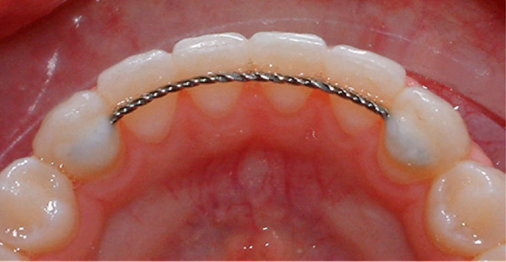
These are comprised of a thin wire glued to the back of upper and/or lower front four to six teeth using a bonding material. This wire keeps the teeth in a fixed position after braces or Aligners to prevent your teeth from moving back to their original place. Fixed retainers are also known as Lingual retainers. Your Aligners Globe Provider can advise you on longer term retention options if there is option of relapse after removable retainer. You may have a fixed retainer on your teeth for the rest of your life.
As the name suggests, they can be worn and taken out as per need and are easy to use. Removable Retainers are further divided into two types based on their type and material.
Removable metal retainer (metal wire with central plastic body, are called Hawley’s Appliance) or clear /plastic removable retainer (transparent just like Aligner tray closely adapted to teeth)
These are further divided into two types based on their type and material.
A) HAWLEY RETAINER
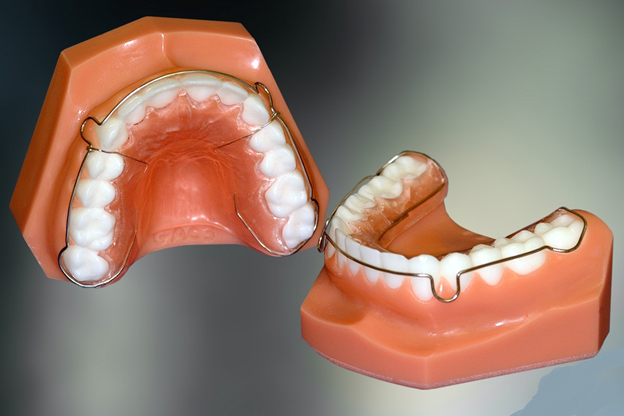
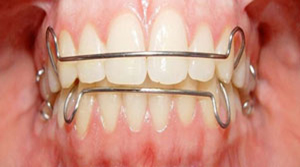
A Hawley retainer is a form of removable orthodontic retainer, which uses a combination of a hard plastic or acrylic plate connected by a thin metal wire. The retainer plate is molded in such a way to fit comfortably in your mouth with the wire settled against the front of your teeth to maintain the alignment. These retainer teeth are customized to fit on your teeth keeping them in new positions.
B) CLEAR RETAINERS
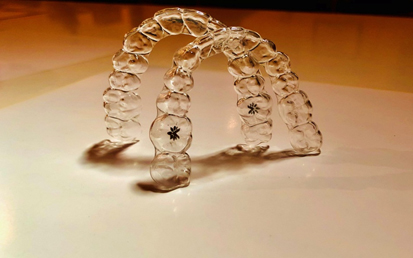
These retainers are made up of clear plastic molded tray in a way to fit tightly over your teeth to retain the results of orthodontic treatment. The removable dental retainer look exactly the same as your last set of Aligners but they are thicker than Aligners and it is not for movements of teeth but will keep the teeth in position where they are.
The dental retainer cost ranges between $100 to $150 from country to country. One should always consult their orthodontist for a dental retainer price quotation because the charges may vary from case to case. So always ask your orthodontist how much he is going to charge you for it. The dental retainer cost is usually quoted for one arch so make sure you ask about both upper and lower retainer charges if you need both.
Dental retainer price also depends on your practitioner; your orthodontist may charge you individually for a retainer, or they may include it in your orthodontic treatment package. Always ask your orthodontist to give you an extra set of the retainer in case you break or lose the first one. Get 2 pairs of removable retainers are to cope with any unforeseen problems.
The variation in dental retainer price depends on the following factors:
The major factor in dental retainer price is the difference in currency exchange rates of all countries.
Some patients may require upper or lower teeth retainers, while some may require both. An orthodontist will charge according to it.
Retainer price also may vary on the kind and thickness of the retainer. Types of retainers (fixed/removable), the material is made of retainer (transparent plastic tray/ hard plastic tray with metal wire). An orthodontist will charge more of a fixed retainer.
Another thing that affects the retainer cost is the laboratory which makes your retainer. The famous and reputed clinics will charge more.
The retainer cost depends on the dental clinic location or whether it is hospital or a private clinic
Your orthodontist experience.
The pairs of retainers, Some patients demand an extra pair of retainers
Dental insurance coverage and follow-up visits. Always check with your insurance company if they would cover the cost of the dental retainer.
Most of the invisible aligners companies charge for the retainers, and also, some companies only provide a single pair of the removable retainer. Good news for you is that Aligners Globe Brand is providing two pairs of removable retainers in the Aligners Globe box, FREE OF COST for budget-friendly treatment for our valued patients. However you will be charged for the 3rd set of retainers if you ask for it. Your orthodontist will tell you the 3rd set of retainer price or permanent retainers cost.
Fixed retainers or permanent retainers are ones put on by your Orthodontist, you cannot remove them by yourself hence they are more expensive than removable retainers. They usually range from $120 to $200 for each arch. Fixed retainers cost also depend upon the factors discussed above.
Dental retainers cost in Pakistan ranges from RS.1000 to RS. 40,000 depending upon the factors discussed above. So always ask your orthodontist how much he is going to charge you for it. The orthodontic retainer in Pakistan cost is usually quoted for one arch, so make sure you ask about both upper and lower retainer charges if you need both. Aligners Globe provides two sets of dental retainers FREE OF COST, included in the Aligners Globe box.
When it’s time to wear dental retainers, always discuss it with your orthodontist. He is the best person to guide you that what will be the right retainer teeth for you. Your orthodontist will decide permanent retainers or removable dental retainer which one will be best for you according to your case. Sometimes your last Aligner will be your temporary removable retainer, until your retention option is determined. Patient’s habits have a great impact on choice of retainers. Based on effectiveness, different types of retainers are suitable for different patients.
Here are some little details about suitability of different orthodontist retainers.
Chronic mouth breathing can lead to dental and skeletal malformation in growing children. Some of these adverse changes include excessive molar and front teeth eruption and lower jaw rotation. Prolonged mouth breathing also can result in the face taking on an elongated appearance – known as long face syndrome – and the lower jaw taking on an abnormal position. The normal growth of the face is forward, and this growth is achieved through proper oral posture, which is the pressure exerted by the tongue as it rests in the roof of the mouth and lips from another side of teeth. Tongue is nature’s retainer teeth providing adequate pressure on teeth to keep them in place.
Causes of Mouth Breathing
Nasal obstruction (the partial or complete blockage of nasal airways) is a common reason for mouth breathing. You may have a blocked nose from common things such as: Enlarged adenoids, which are the patches of tissue in the back of your throat and above your tonsils or Nasal allergies etc.
A mouth-breather doesn’t rest their tongue on the roof of their mouth, thus the jaws can’t be properly shaped by the tongue. It’s advisable to see ENT specialist prior to start any orthodontic treatment.
If the underlying cause of mouth breathing is not treated, there are always higher chances of relapse making it difficult for the teeth to remain in its new position and without fixed retainers.
Patients with habit of teeth grinding should preferably go for Hawley retainers or fixed retainers. Clear retainers are not a suitable pick for them because these have lesser durability and can wear off with time.
A significant cause of relapse of orthodontically treated teeth is thought to be the genetics. The genetically misaligned teeth pass down from parents or paternal/maternal siblings can be from generation to generation. Therefore, such patients need fixed retainers for longer time duration.
You have to wear the retainers for about 6 months to almost 2 years. Duration of wearing retainers is basically subjective to each patient.
Most patients are advised to wear their removable retainers full-time, day and night, removing only for meals and drinking and to brush their teeth and clean the retainers. After that use is reduced to wearing the retainers every night. Eventually – after about a year – your orthodontist may allow you to start wearing them every few nights, about 4-5 nights a week. And eventually, it’s ideal to wear the retainers for 2-3 nights in a week for lifetime. Similarly, you have to keep wearing the Fixed retainers for year’s maybe decades.
Take care of your retainers like your teeth, and scrub them with a toothbrush and water after each use. Avoid using toothpaste for the retainer as it contains abrasives and causes scratches that will make it difficult to clean. Maintain a good oral hygiene. Prevent plaque and bacterial accumulation in your mouth and orthodontist retainers. Brush and floss every day: if you have a permanent retainer, use a water floss to remove any bacteria or food residue under the retainer.
Removable retainers should be taken out for meals or drinking. Never eat or drink with them in mouth. Keep it away from hot places like car dash board or near heater so that plastic do not change its shape.
Store it in the proper Dental retainer case after removing to avoid getting it lost or damaged. Keep the retainers away from kids and pets.
Repair or replace your broken or lost retainer right away. The longer you go without wearing your retainer, the more likely it is that your teeth will start to shift its back position. Inform immediately to your orthodontist or Aligners Company.
Clean your retainer prior to each insertion. You can use the Retainer Cleaning tablets or a normal tooth brush. Rinse under running water and brush until clean.
Never use denture cleaner or soak in alcohol or bleach, as they will be damaged.
Do not place retainers in boiling or hot water to clean, as they will be damaged.
Do not drink any hot liquids while retainer inside your mouth.
Retainer must ALWAYS be removed when eating.
Drinking: Except for cold or room temp water, always remove retainer while drinking anything. Any fluid will get inside the retainer and be held against your teeth possibly for hours and can cause staining or damage the teeth and retainer.
Chewing Gum: Do NOT chew gum while wearing retainer.
Smoking: It is advised NOT to smoke while wearing the retainer. It will stain the retainer and teeth.
Always bring your retainer along on appointment day with your orthodontist.
Do not let anyone else in your friends or family to try on your retainer.
As the name indicates Aligners are used to align teeth and retainers are used for retention of teeth in their final position. Retainers are custom made to ensure that your new smile is maintained in its new position and it is comfortable fit for overnight wear.
The retainers look exactly the same as your last set of aligners but they are more thicker than aligners and it is not for movements of teeth but will keep the teeth in position where they are.
It’s proven that teeth can shift back to their original position if you don’t wear a retainer each night after treatment is completed. They’re actually quite similar to the Aligners you wore during treatment, but now you only wear them at night. Retainer do more than just keeping your teeth straight.
Wearing a retainer after any orthodontic treatment is an extremely important step, because it keeps teeth stable in their new positions. If you want your teeth to remain in their ideal position, it is best to wear a retainer as directed by Aligners Provider. Fixed retainers/ permanent retainers and removable retainers are two common types of dental retainers. Your orthodontist will decide which retainer is best for you. In many cases your last Aligner will be your temporary retainer, until your retention option is determined. Your Aligners Provider can advise you on longer term retention options.
The Aligners simply aren’t made for long-term use, and they won’t be able to stand up to continuous wear for weeks at a time as aligners become loose after 10 to 15 days so wearing a loose tray won’t provide any effect. Moreover Aligner trays are designed to move teeth and retainer teeth are designed to retain them in the position they have ended up.
No! You‘ll need to wear a retainer for 1 year to 2 year after completion of treatment or as suggested by your orthodontist .Even though aligners moves teeth differently from braces, the result is still the same. You will need to wear retainers after any kind of teeth straightening.
If your orthodontist suggests that your teeth require permanent retention then you need fixed retainers.
Relapse is the loss of any correction achieved by orthodontic treatment. Relapse is very
common among braces wearers, especially during the one year after the braces are removed. The
main reason why teeth relapse in this period is that they aren’t yet fully fixed in their new
places.
Braces move teeth by putting constant pressure on the tooth, causing the bone around it to
remold, allowing the tooth to move. Once the braces come off, though, there is no longer force
pushing your teeth into the desired position. Instead, there are forces that want to draw your
teeth back to their old position. The periodontal ligaments around your teeth are a tough,
flexible fiber, so they don’t remodel initially. Instead, they stretch, like a rubber band. Once
your braces are removed, then, you basically have a rubber band trying to pull your teeth back
to where they were before.
The movement of your teeth back is made more likely by the fact that the reworked bone around
your tooth may be less dense along the path from your tooth’s new position to its old
position.
So now that you know all about the retainers, here is your take home message;